The Hidden Costs of Seasonal Revenue Gaps and Poor Customer Retention in Golf Businesses
- Teebox Marketing Team

- May 26
- 3 min read
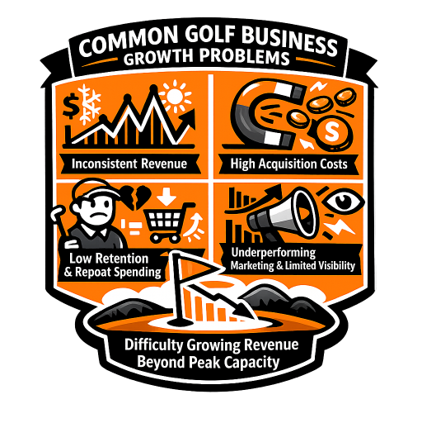
Golf businesses face unique challenges that can quietly drain their profits and stunt growth. Among the most pressing issues are seasonal revenue gaps, expensive customer acquisition, weak customer retention, limited marketing visibility, and restricted revenue growth. These problems often intertwine, creating a cycle that is difficult to break without a clear understanding of their impact.
This post explores how these common problems affect golf businesses, revealing the hidden costs that many operators overlook. By understanding these challenges, golf course owners and managers can take practical steps to build a more stable and profitable operation.
How Seasonal Revenue Gaps Hurt Golf Businesses
Golf is a seasonal sport in many regions, with peak activity during warmer months and sharp declines in colder seasons. This creates significant revenue gaps that affect every aspect of a golf business.
Cash Flow Challenges
When revenue drops during off-season months, businesses struggle to cover fixed costs such as maintenance, staff salaries, and loan payments. This can force cuts in essential services or lead to borrowing, increasing financial strain.
Underused Facilities
Empty courses and clubhouses during slow months represent wasted resources. Maintaining these facilities year-round without corresponding income reduces overall profitability.
Staffing Difficulties
Seasonal fluctuations often require hiring temporary workers or reducing staff during slow periods. This disrupts team cohesion and can lower service quality when business picks up again.
For example, a golf course in the northern United States might generate 70% of its annual revenue between April and September, leaving the remaining months with minimal income. Without a strategy to manage this gap, the business risks instability.
The High Cost of Customer Acquisition
Attracting new golfers is essential but often expensive. Golf businesses face several challenges in acquiring customers:
Competitive Market
Many golf courses compete for the same pool of players, driving up marketing and promotional costs.
Limited Target Audience
Golf appeals to a specific demographic, which narrows the potential customer base and increases the cost per acquisition.
Inefficient Marketing
Without clear data on what works, businesses may spend heavily on ineffective campaigns, wasting resources.
For instance, a golf course might spend thousands on digital ads and local promotions but see only a small increase in new players. This imbalance raises the cost of each new customer and reduces overall return on investment.
Weak Customer Retention Undermines Long-Term Success
Keeping existing customers is often more cost-effective than acquiring new ones, yet many golf businesses struggle with retention.
Lack of Engagement
Without regular communication and incentives, golfers may lose interest or switch to competitors.
Poor Customer Experience
Inconsistent service quality, outdated facilities, or limited offerings can drive customers away.
Missed Opportunities for Loyalty Programs
Golf businesses that do not implement membership benefits or rewards miss chances to build lasting relationships.
Consider a golf club that does not follow up with players after their first visit or fails to offer season passes. These missed connections lead to lower repeat visits and reduced lifetime customer value.
Limited Marketing Visibility Restricts Growth
Golf businesses often operate in local or regional markets, making marketing visibility crucial.
Low Online Presence
Many courses lack updated websites or active social media profiles, limiting their reach.
Poor Local Awareness
Without community engagement or partnerships, potential customers may not know about the course or its offerings.
Ineffective Messaging
Marketing that does not highlight unique features or value propositions fails to attract attention.
For example, a golf course with outdated online information and no local events may struggle to draw new players, even if the course itself is excellent.
Restricted Revenue Growth from Untapped Opportunities
The combination of seasonal gaps, high acquisition costs, weak retention, and limited visibility constrains revenue growth.
Missed Ancillary Revenue
Golf businesses often overlook opportunities such as pro shop sales, food and beverage services, or hosting events.
Underdeveloped Programs
Junior golf clinics, corporate outings, and leagues can provide steady income but require investment and planning.
Failure to Adapt
Without innovation, courses may lose relevance as customer preferences evolve.
A golf course that focuses solely on green fees may miss out on significant revenue from tournaments, merchandise, or dining experiences.
Practical Steps to Address These Challenges
Golf businesses can reduce the hidden costs by adopting targeted strategies:
Manage Seasonal Revenue
Introduce off-season events, indoor simulators, or special promotions to attract players year-round.
Improve Customer Acquisition
Use data-driven marketing to target likely customers and track campaign effectiveness.
Boost Retention
Develop loyalty programs, personalized communication, and consistent service quality.
Increase Marketing Visibility
Maintain an active online presence, engage with local communities, and highlight unique course features.
Expand Revenue Streams
Explore additional services, host events, and create programs for different customer segments.
Golf businesses face real challenges that impact their bottom line beyond what appears on the surface. Seasonal revenue gaps, costly customer acquisition, weak retention, limited marketing visibility, and restricted growth all contribute to hidden costs that can stall success.
Comments